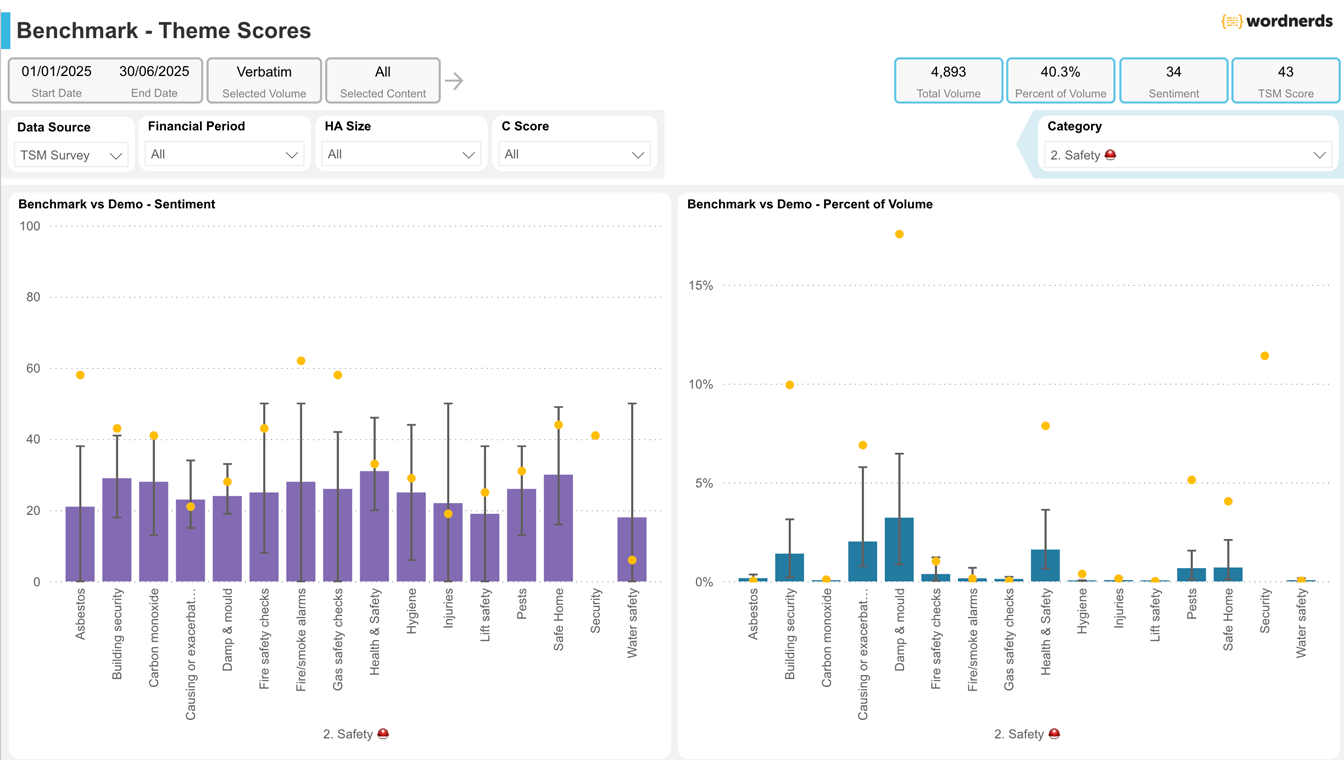
 What 135,000 tenant voices revealed: the Wordnerds × Housemark Social Housing Benchmarking Report 2026
The UK's first qualitative TSM benchmark — 135,000+ tenant comments across 18 housing associations, and four findings the satisfaction scores weren't telling you.
What 135,000 tenant voices revealed: the Wordnerds × Housemark Social Housing Benchmarking Report 2026
The UK's first qualitative TSM benchmark — 135,000+ tenant comments across 18 housing associations, and four findings the satisfaction scores weren't telling you.
Regulation & Benchmarks
Your repair scores aren't stuck because of bad contractors
55% of repair complaints aren't about the repair — they're about the wait. The TSM benchmark data points to one moment that wrecks satisfaction: the silence between booking a repair and someone showing up. Here's what the numbers show and what to do about it.
 Written by Sarah Wilson
Created · Last updated
Why are repair satisfaction scores stuck?
Because most teams are fixing the wrong thing. Ask most housing teams why their TSM repair scores won't budge and they'll point at the contractor — response times, first-time fix rates, operative conduct. That's the wrong place to look. In our analysis with Housemark of 135,000+ tenant comments across 18 housing associations, 55% of repair complaints were about time, not the repair itself: the waiting, the not knowing, the day off work for nobody to show up.
Your operatives might be perfectly competent. Tenants just never feel it, because the emotional damage is done long before anyone picks up a toolbox.
The appointment cliff
There's a specific moment in the repair journey where satisfaction doesn't dip — it falls off a cliff. It's the gap between "I've booked a repair" and "someone is actually coming."
Booking a repair generates around 1,200 comments in our dataset: comparatively few complaints, and tenants feel a sense of progress. Waiting for the appointment generates nearly three times as many comments — 3,442 — and the lowest sentiment of any stage in the entire journey. Sentiment score: 25 out of 100. TSM: 45.
At that point, comments shift from "I'm frustrated" to "I gave up chasing them." That's not dissatisfaction. That's disengagement — and it's a different problem entirely.

Not all waiting feels the same
Call waiting times score poorly in our data (sentiment 37, TSM 63) but not catastrophically. Tenants are annoyed, but they can feel forward motion — something is happening.
Waiting for an appointment is different. There's no sense of progress, no indication anyone is still on the case — just silence, and a growing suspicion the job has been forgotten.
Behavioural research backs this up: uncertainty multiplies perceived effort. A tenant who knows "the contractor is coming next Wednesday" can plan their week. A tenant who hears "someone will be in touch" spends the next fortnight mentally re-planning childcare, work, and follow-up calls — none of which shows up in your operational data.
The value of feedback is inversely proportional to its latency. By the time annual TSM data tells you the appointment wait is destroying satisfaction, you've been losing residents' trust for months.
You already have the data. It's just not organised right.
Most landlords aren't missing information — they're missing structure. Stage your tenant feedback around the journey tenants actually experience, not your org chart: report fault, get acknowledgement, book slot, wait for appointment, visit day, completion, follow-up or rework.
When we tag TSM verbatim to these stages, the pattern is striking every time. Operative conduct sits near the top — sentiment above 50, TSM in the high 70s. Appointment wait and incomplete repairs cluster at the bottom, sentiment in the low-to-mid 20s.
Your contractors are getting credit for none of the good work they do, because tenants have already checked out emotionally before they arrive.
The fix isn't faster. It's clearer.
You don't always need to shave days off your schedule — you need to strip uncertainty out of it. "Your appointment is on 14 May between 8–12" beats "we'll be in touch" even if the date is exactly the same. In our dataset, tenants who explicitly acknowledged delays — "I understand they're busy" — still showed significantly higher sentiment than those left in silence. Honest expectations, clearly set, do most of the work.
Proactive status updates are the other lever. Property maintenance platforms report up to 40% fewer repeat chaser calls when tenants get automated updates at key journey points. Even a simple "we haven't forgotten you, aiming for next week" moves sentiment from abandonment to something resembling partnership.
And protect your first-time fix rate. Every avoidable repeat visit sends tenants back through the worst stage of the journey — not just a cost problem, but a satisfaction problem in disguise.
What to take to your board
Pick three metrics anchored in the journey: sentiment around appointment wait, first-time fix rate, and the percentage of tenants mentioning chasing or confusion. Baseline them with six months of historic data. Run a targeted experiment — exact appointment dates for one region, or automated SMS updates for emergency jobs only — and measure what moves.
One London borough reported that lifting non-emergency repairs completed within target from 72% to 75.4% coincided with satisfaction with repair times rising from 70.7% to 72.5% in a single year. A cause-and-effect story linked to specific journey stages is exactly what boards and regulators want to see.
Give your contractors the credit they're owed
Your contractors are probably better than your scores suggest. Fix the journey around them — especially that appointment wait — and you'll finally get credit for the service you're already delivering.
Up next in the series: Stop chasing satisfaction. Start measuring effort.
Frequently asked questions
Why are my repair satisfaction scores stuck?
Usually because teams blame the contractor when the problem is the journey. In our Housemark analysis of 135,000+ tenant comments, 55% of repair complaints were about time — the waiting and not knowing — not the repair itself. The emotional damage is done before an operative arrives.
What is the appointment cliff in repairs?
The point in the repair journey where satisfaction falls off a cliff — the gap between booking a repair and someone actually coming. Waiting for an appointment generated 3,442 comments in our dataset and the lowest sentiment of any stage: 25 out of 100, against a TSM score of 45.
Why does waiting for a repair feel worse than waiting on a call?
Because of uncertainty, not duration. Call waiting scores poorly (sentiment 37, TSM 63) but tenants can feel forward motion. Waiting for an appointment offers no sense of progress, so tenants suspect the job is forgotten. Uncertainty multiplies perceived effort more than the delay itself.
How do you fix low repair satisfaction without speeding up repairs?
Strip out uncertainty instead of shaving days off the schedule. A fixed slot beats "we'll be in touch" even at the same date. Proactive status updates cut repeat chaser calls by up to 40%, and protecting first-time fix rates stops tenants re-entering the worst stage of the journey.
How should I stage tenant feedback to find the problem?
Map feedback to the journey tenants experience, not your org chart: report fault, get acknowledgement, book slot, wait for appointment, visit day, completion, follow-up. Tagging TSM verbatim to these stages reveals appointment wait and incomplete repairs clustering at the bottom while operative conduct scores near the top.
Read more from the blog
What 135,000 tenant voices revealed: the Wordnerds × Housemark Social Housing Benchmarking Report 2026
The UK's first qualitative TSM benchmark — 135,000+ tenant comments across 18 housing associations, and four findings the satisfaction scores weren't telling you.
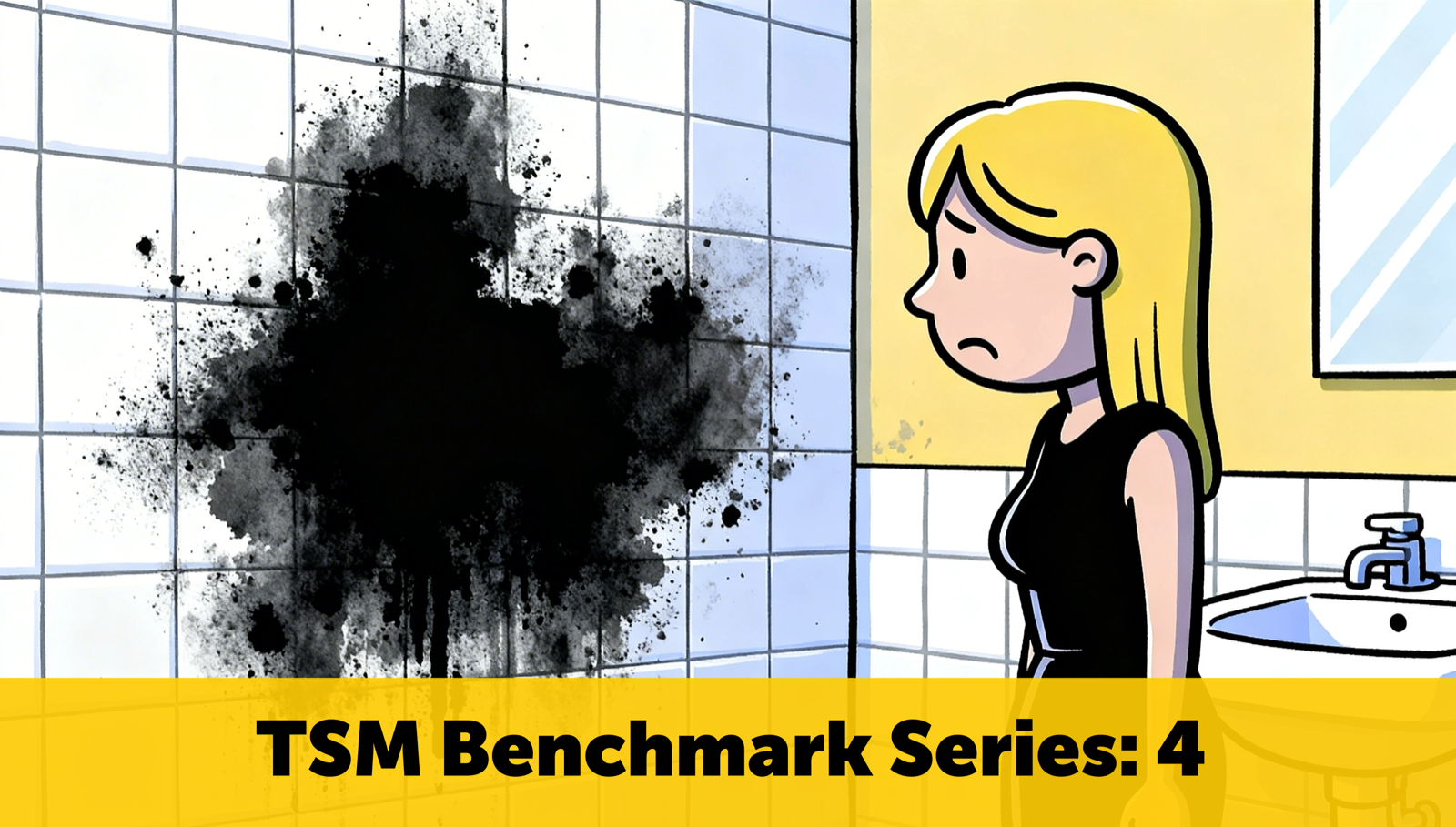 You're not ignoring tenant safety. You're just finding out too late.
Under Awaab's Law, a tenant survey comment is a compliance trigger. Here's what an early warning system actually needs.
You're not ignoring tenant safety. You're just finding out too late.
Under Awaab's Law, a tenant survey comment is a compliance trigger. Here's what an early warning system actually needs.
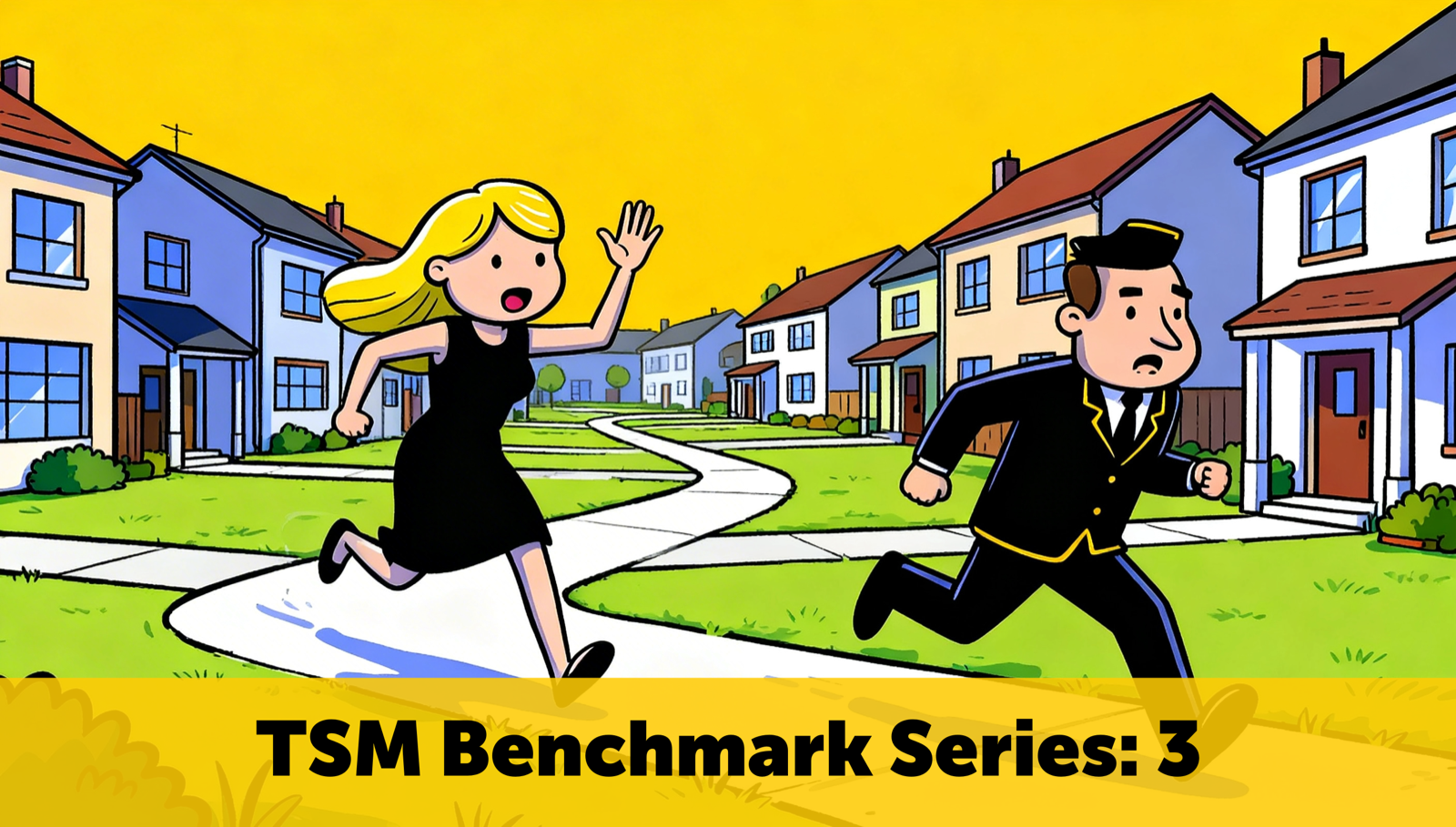 Stop chasing satisfaction. Start measuring effort.
One in six tenants in our Housemark benchmark described putting in unnecessary effort to get something sorted. Effort predicts loyalty better than satisfaction does.
Stop chasing satisfaction. Start measuring effort.
One in six tenants in our Housemark benchmark described putting in unnecessary effort to get something sorted. Effort predicts loyalty better than satisfaction does.
